The Childhood and Teenage letters and the Adult letters to and from Abraham
Click on pictures for larger versions!
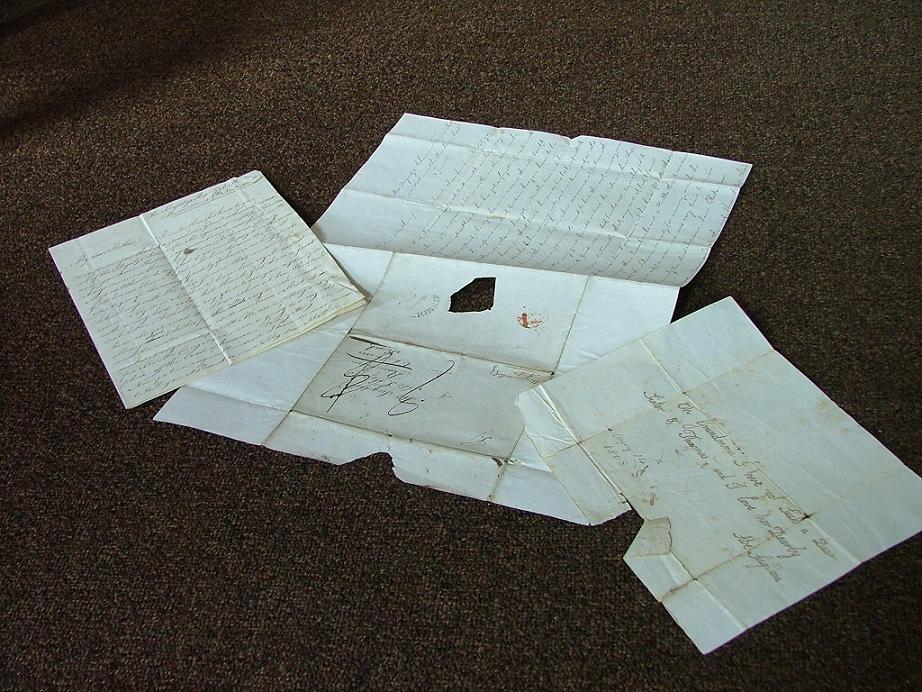
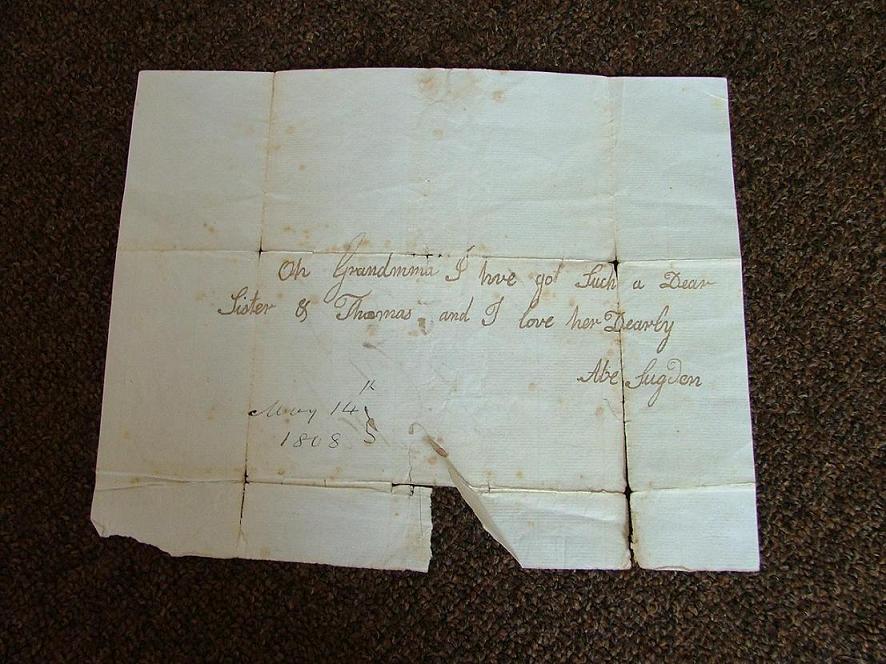
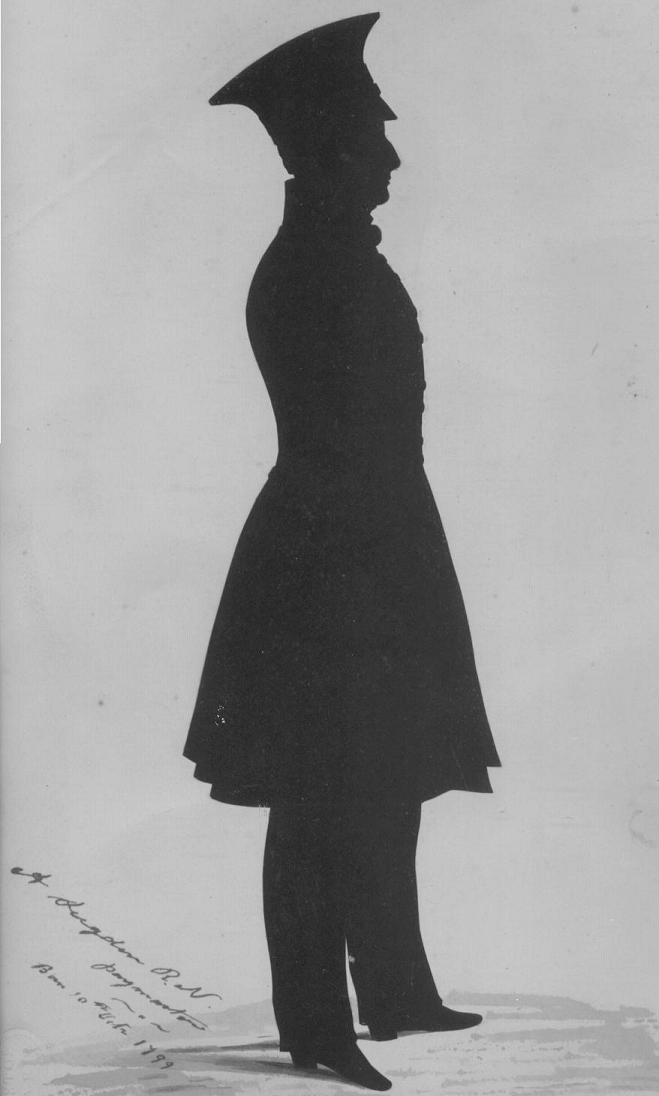
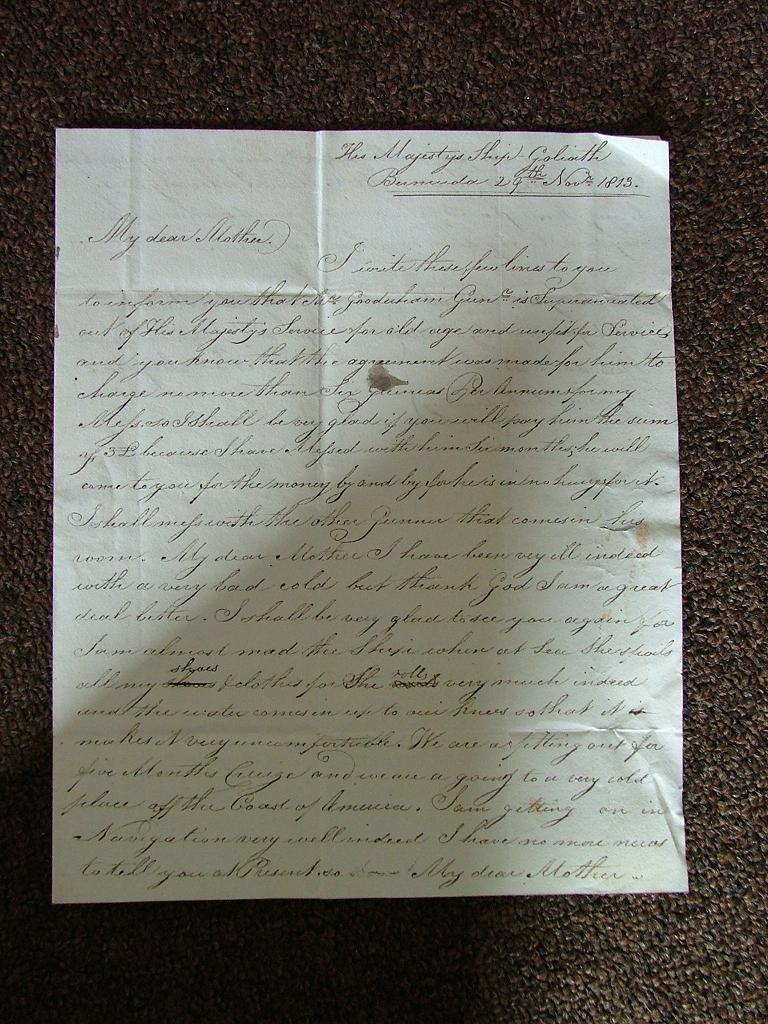
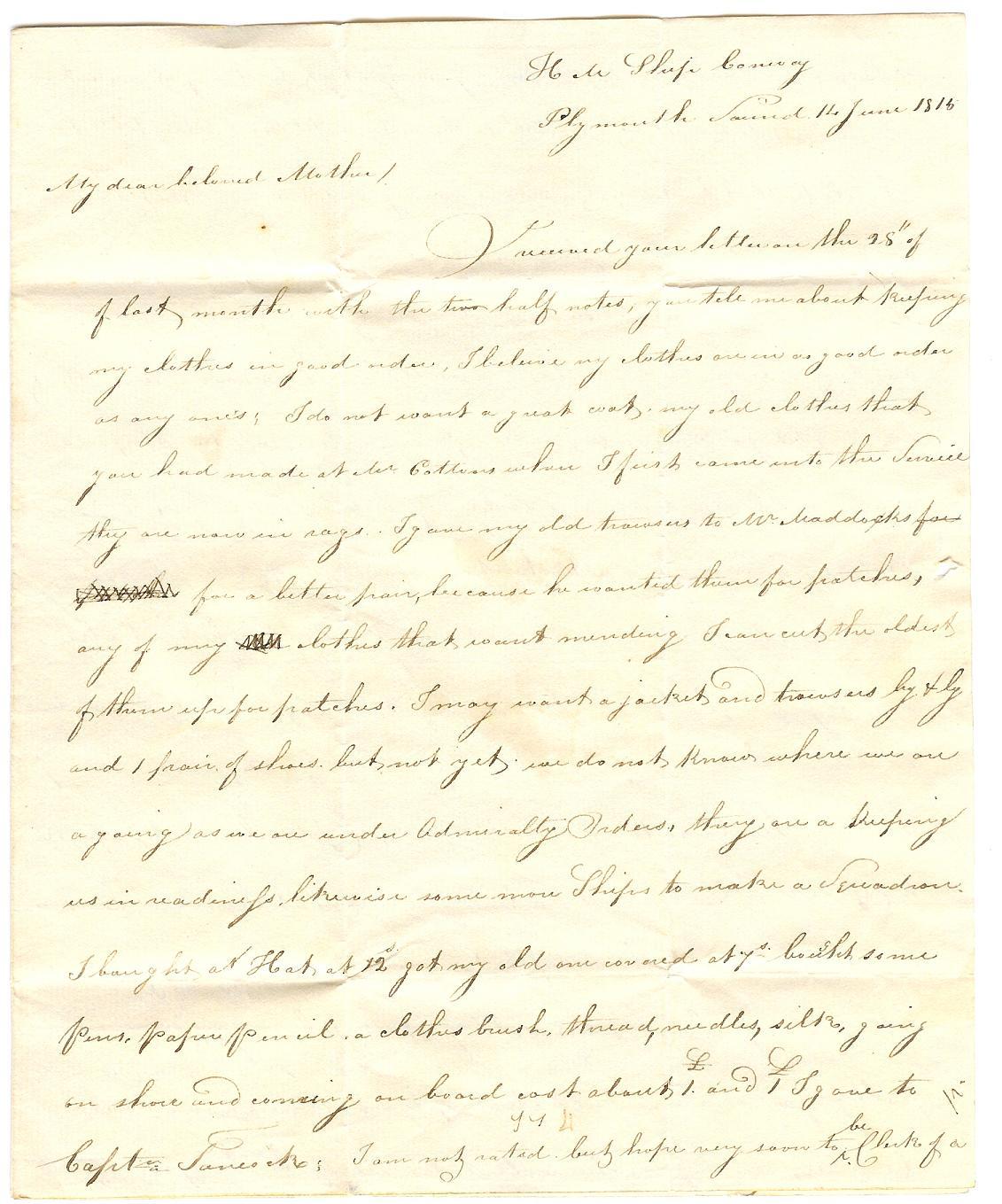
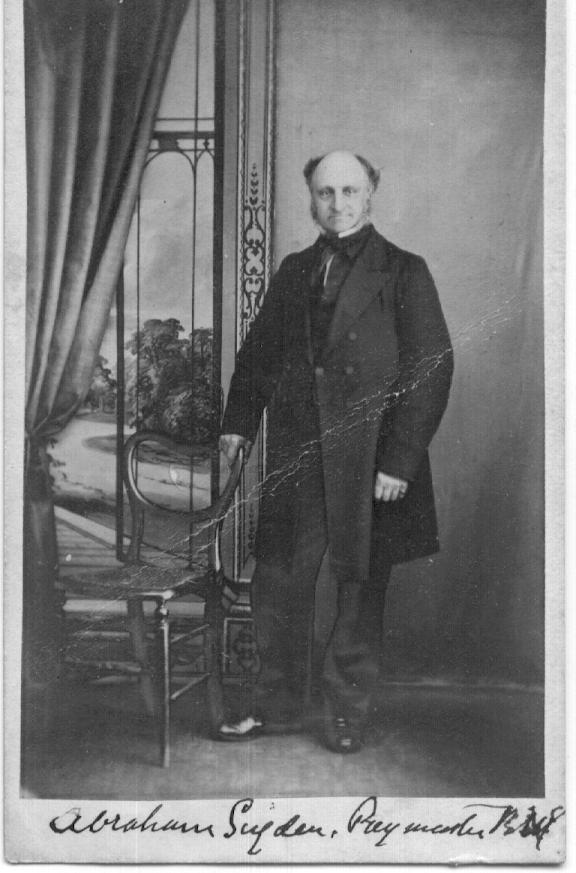
In 2004, my cousin Geraldine showed me a letter she had found which had been written in 1815. I took it home with me and then transcribed it carefully. I found that it was written by a boy called Abraham Sugden who worked on a Navy ship, to his mother. Although I thought he must have been one of my ancestors, I wasn't sure who he was. Other letters then turned up that had been in my brother's possession and I found yet more among papers I had inherited from my father. The writing was tiny and extremely hard to read, but, fascinated, I pressed on to transcribe most of the letters I had and it is those transcriptions that appear in the linked pages: the Childhood and Teenage and the Adult letters.
I have put in only the grammar that appears in the letters. In some places where you might expect a full stop there is none and in some places there is a full stop, but it is followed by a lower case letter. As the writing is done with a very fine nib, it is perfectly possible that I have missed some full stops altogether and may have misinterpreted commas as stops or vice versa. Where there are words I cannot read, I have put the nearest interpretation (letter by letter, not necessarily trying to guess a word) and surrounded it with two question marks. I have also tried to keep to his spelling: for instance the occasional h appears at the beginning of words such as ‘as’.
There are frequently torn holes in the paper where the seal had been - the early letters were sent by folding them up, sealing them and writing the address on the outside; other holes have cut edges as if something has been cut out. I wonder if sealing wax itself was torn or cut out for reuse, partly because a remaining seal does have an extra piece of paper sticking out at the bottom, this paper having a cut edge and that cut edge having writing underneath! I have shown where these appear in each of the lines by a few x’s representing the approximate length of the hole as it appears in that line. It is even apparent that Abraham knew that these holes were going to occur. In nearly the correct places in his script, there are some circles drawn and he has avoided writing across these circles. However, in half these letters, they missed the actual placing of the sealing wax and the holes obliterate some words!
At first I thought that some of the letters were written on paper that had been written on before. It looked as if the paper had been washed to reduce the strength of the writing, and then reused in lines perpendicular to the old ones. But then I came across letters that had clearly been continued after the sheet was filled by writing directly on top of but across the earlier parts of the letter. I realised then that the apparently washed out writing had probably been done in another colour to make it more readable while doubling the content of one sheet of paper but that this had faded leaving the second half of the affected letters unreadable in all but one case. These letters all appeared to come to an abrupt end without any sign off but in fact I now realise that the continuations and signatures had all faded away.
Even later, I found a few more letters relating to the adult Abraham, some of them written by him, others to him. The content of these letters shows that at some point in his twenties, he became engaged to and then married in 1831 to a Mary Heaver and I have transcribed a few letters to and from her and even two from Abraham to her mother. By this time he had advanced to the role of Purser on HMS Cordelia.
Mary Heaver's letters had even less punctuation than Abraham's teenage letters, while his adult letters showed a slight improvement.